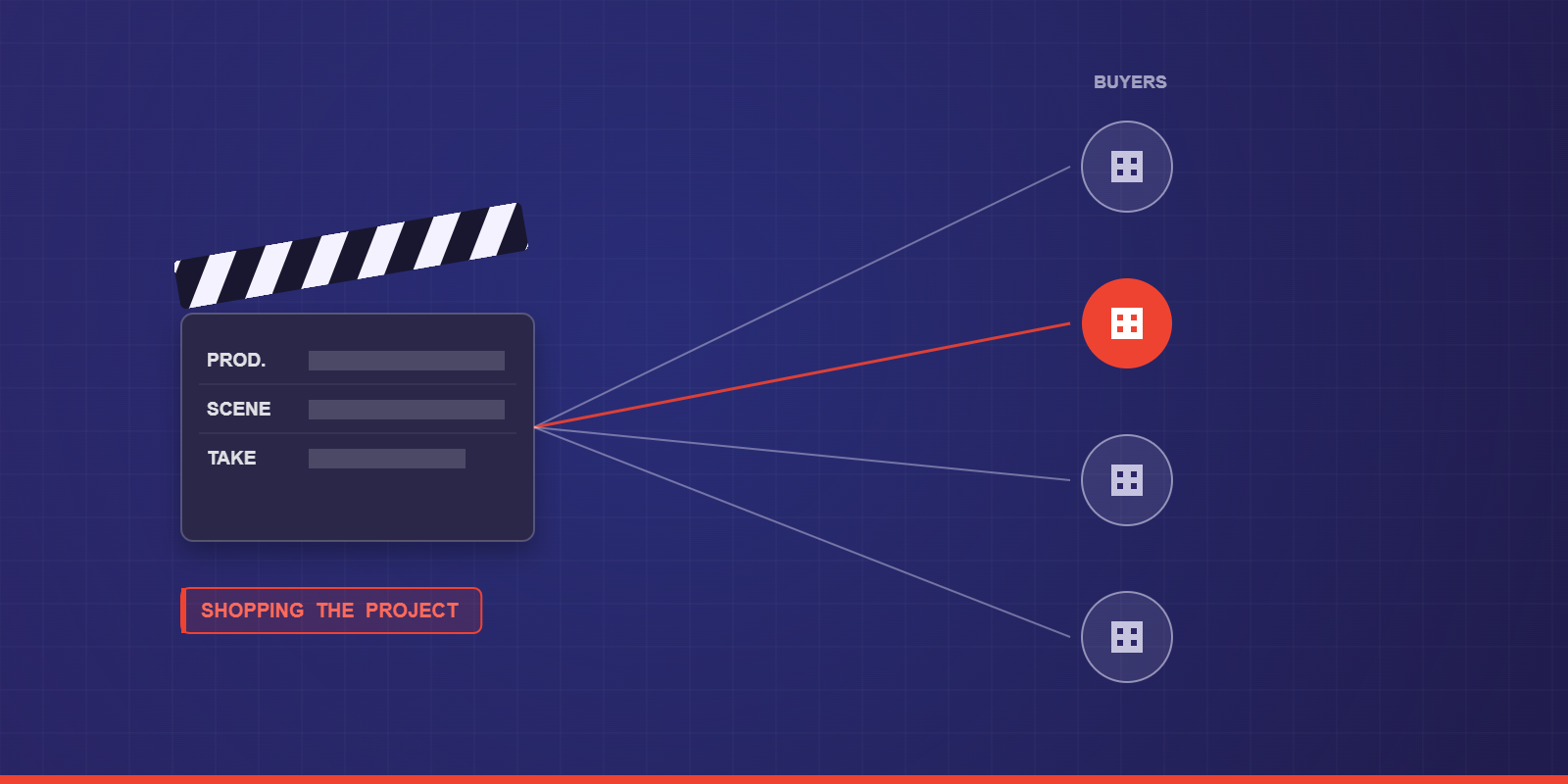
A Shopping Agreement is an agreement between the owner of a creative work — a screenplay, treatment, book, series bible, and the like (the "Property") — and a producer, whereby the producer obtains the right to "shop" the Property to buyers (a financier, studio, distributor, network, or other potential buyer) for a fixed period of time.
Typically the producer pays no money to the owner for the right to shop the Property, and the duration of the Shopping Agreement is usually 12 to 18 months — a period that may be extended under certain circumstances if the parties agree.
Shopping Agreements are often viewed as convenient and cost-effective: they require less time and expense to negotiate than a more detailed Option/Purchase Agreement. Arranged between trusted parties, a Shopping Agreement can be a way to test the waters for interest in a Property and, on occasion, result in a deal. But like most agreements, the devil is in the details — and the terms can vary widely.
While it had been common for a Shopping Agreement to provide that, when a buyer expresses interest, the producer and owner would each negotiate their individual deals with that buyer — the producer for attachment to the project as a producer, and the owner for the sale of the rights to the Property — we now see great variation in how this and other terms are stated, in ways that can significantly affect the rights of both owner and producer.
Terms of note
Exclusivity
Will the producer have the right to shop the Property to the exclusion of all others? If so, and the owner finds a potential buyer during the term, the owner cannot independently proceed and must refer that buyer to the producer.
Development
Will the producer have the right to create materials about the Property — a look book, a synopsis, a sizzle reel? And who owns those materials if no buyer is secured?
Independent negotiation
Will the producer control the initial negotiation with a potential buyer, or will the owner have meaningful participation from the outset? If the former, the producer may strike their deal first, leaving the "offer" to the owner fixed and with little room to negotiate.
Controlled negotiation disguised as independent negotiation
Some agreements let the producer control all negotiation — including the consideration to be paid for the sale of the owner's Property. In the extreme, that could leave the owner with no compensation at all, except a contingent right to participate in the net profits (if any) from exploitation of the Property. Here is an example of a clause that suggests independent negotiation but is really controlled negotiation:
[Writer] and [Producer] shall each directly negotiate in good faith with such Buyer the terms and conditions, including without limitation the fees and credits, in connection with their agreement with the Buyer. In the event the Project is "set-up" with a Buyer during the Term, then [Producer] shall directly negotiate in good faith with such Buyer: (y) the terms and conditions for the disposition of any and all rights in and to the Underlying Property; and (z) the terms and conditions for [Individual/Producer] executive producer services on the Project … so as not to frustrate the development, production, financing or exploitation of the Project.
In summary
Words matter. For both the producer and the owner, it is important that you fully understand the terms of a Shopping Agreement. On a positive note — with trusted partners and a balanced agreement, good things do happen.
 Rosemarie Tully, P.C. — counsel to the creative